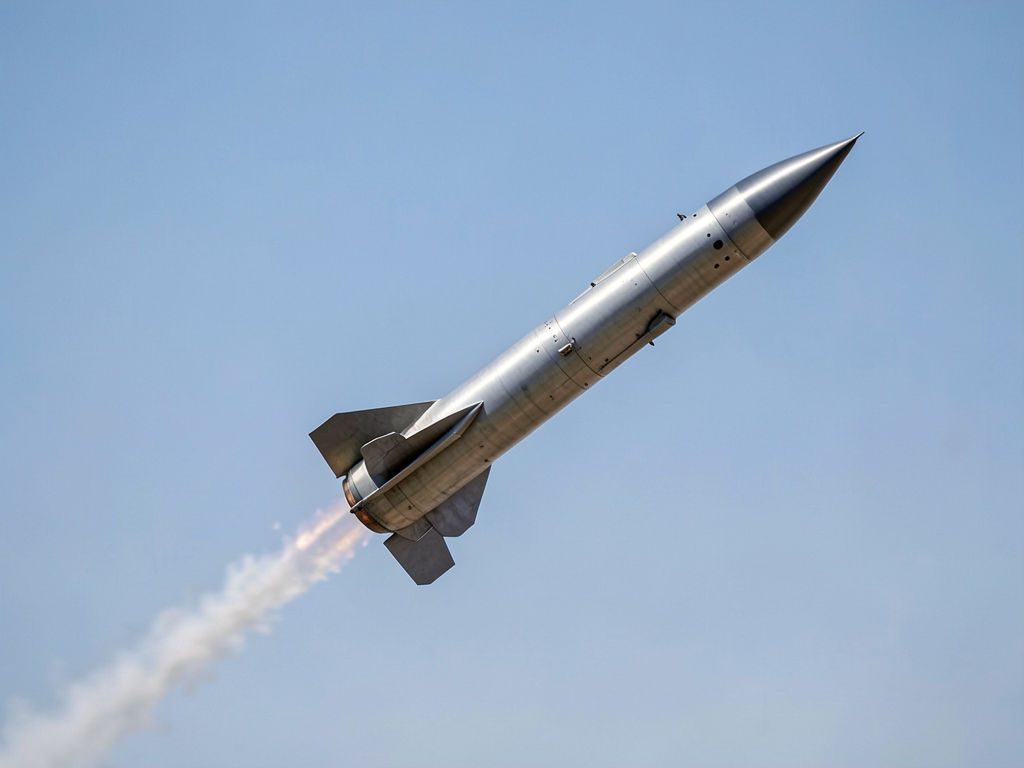
Pakistan has achieved a major leap in its military capabilities with the successful test of the Fatah-3 supersonic cruise missile, a development that significantly strengthens the nation’s conventional deterrence and regional defence posture.
The Pakistan Army conducted the test launch on Wednesday, with the Inter-Services Public Relations confirming that the advanced weapon system performed flawlessly. The missile demonstrated its ability to strike distant targets with exceptional accuracy while traveling at supersonic speeds, a capability that places Pakistan among a select group of nations with such technology.
Equipped with cutting-edge navigation and propulsion technology, the Fatah-3 represents a substantial upgrade to the Army Rocket Force Command’s arsenal. Military officials emphasized that the system will provide commanders with greater operational flexibility and extended strike reach, critical advantages in modern warfare scenarios.
The test was observed by the commander of the Army Rocket Force Command, senior military leadership, and the scientific and engineering teams responsible for developing the missile. Their presence underscored the strategic importance of this achievement for Pakistan’s defence establishment.
President Asif Ali Zardari, Prime Minister Shehbaz Sharif, and Chief of Army Staff Field Marshal Asim Munir all congratulated the armed forces and technical teams on the successful launch. The leadership praised the dedication of scientists and engineers who brought this complex project to fruition, highlighting their contribution to national security.
Interior Minister Mohsin Naqvi took to social media to celebrate what he called a “proud feat” by Pakistan’s scientific community. He described the Fatah-3 test as a major advance in the defence sector and an important milestone in the country’s military capabilities.
The successful test comes amid a series of recent missile developments. Last month, Pakistan tested the Fatah-2 hypersonic ballistic missile with extended range capabilities. Earlier in October, the military also launched an upgraded version of the Fatah-4 ground-launched cruise missile, which features terrain-hugging technology designed to evade enemy missile defence systems.
These successive tests demonstrate Pakistan’s commitment to maintaining a credible conventional deterrent through indigenous technological advancement. The Fatah series of missiles, with their varying capabilities and ranges, provide military planners with a diverse toolkit for different operational scenarios.
Defence analysts note that supersonic cruise missiles like the Fatah-3 are particularly valuable because their high speed reduces the time available for enemy defences to react. Combined with advanced navigation systems, this makes them formidable weapons in any potential conflict scenario.
The development of the Fatah-3 reflects years of investment in domestic defence research and development. Pakistan’s growing missile capabilities signal the maturation of its indigenous defence industry and reduce reliance on foreign suppliers for critical weapons systems.
As regional security dynamics continue to evolve, Pakistan’s military leadership views such technological achievements as essential to maintaining strategic balance and protecting national interests. The successful Fatah-3 test reinforces the country’s position as a significant military power with advanced conventional capabilities.