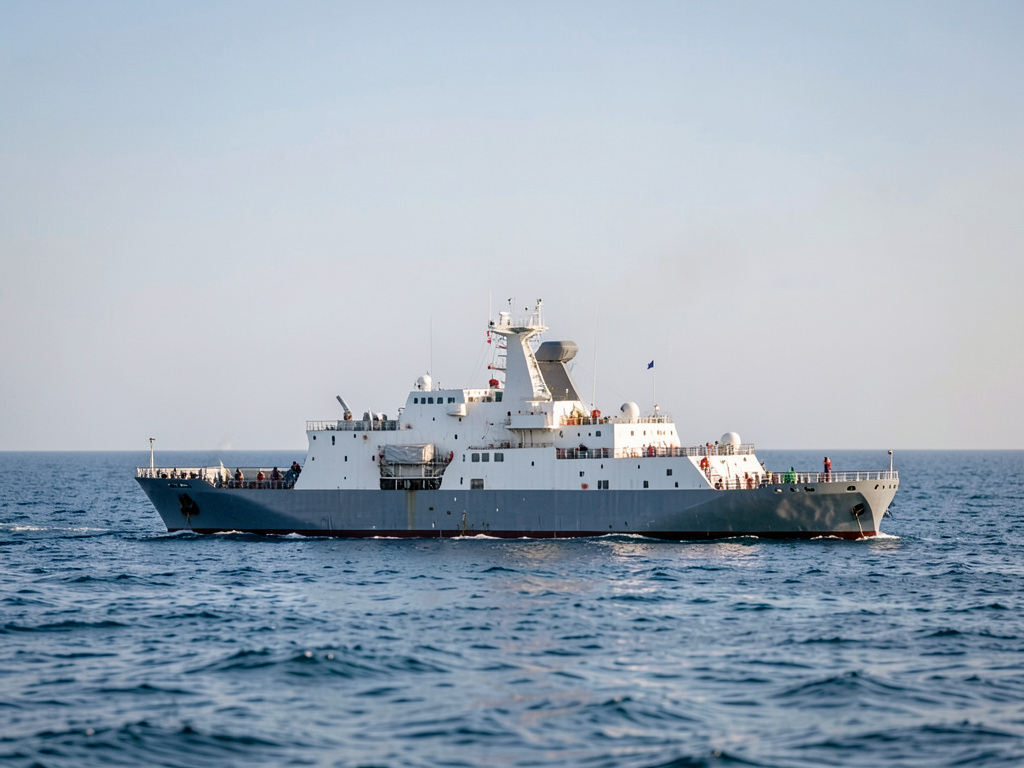
A Turkish seismic survey vessel has docked at Karachi Port, launching Pakistan’s first serious attempt in nearly two decades to discover what lies beneath its coastal waters—a search that could either unlock vast energy reserves or confirm the challenges that kept explorers away for so long.
The arrival of the research ship marks the beginning of an ambitious offshore exploration campaign covering 670 square kilometers for 3D seismic mapping and 2,353 kilometers of survey lines for 2D data collection across two separate zones off the coasts of Sindh and Balochistan. The vessel, fresh from completing exploration work in Somalia, berthed at Berth No. 24 in Karachi, where officials held a ceremony to formally launch the initiative.
What makes this development significant is not just the technology being deployed, but the timing. Pakistan abandoned offshore oil and gas exploration two decades ago, leaving a conspicuous gap in the country’s energy strategy even as import bills for petroleum products continued to climb. The reasons for that long pause remain a subject of debate—whether it was the technical difficulty of deep-sea exploration, unfavorable geological assessments, or simply a lack of investment and political will.
Now, with energy security emerging as a critical national priority and Pakistan’s foreign exchange reserves under constant pressure, the government has decided to revisit those waters. The Petroleum Division described the Turkish vessel’s arrival as a milestone in Pakistan-Türkiye energy cooperation, emphasizing the potential to revive exploration efforts that have remained dormant since the early 2000s.
The current push follows the launch of the Offshore Bid Round 2025 in January of last year, which offered exploration licenses for 40 offshore blocks in the Indus and Makran basins after an 18-year hiatus. The blocks span areas that have long been considered geologically promising but remain largely unexplored due to the technical and financial challenges of offshore drilling.
For Pakistan, the stakes are considerable. Discovering commercially viable oil and gas reserves could significantly reduce the country’s dependence on expensive energy imports, ease pressure on foreign exchange reserves, and provide a long-term foundation for economic stability. Conversely, if the surveys yield disappointing results, it would raise questions about whether Pakistan’s offshore potential was overstated and whether the two-decade pause was justified.
The seismic data collection is expected to take several months, after which the findings will be analyzed to determine whether the offshore blocks contain extractable hydrocarbon reserves. Only then will the true significance of this renewed exploration effort become clear—and whether Pakistan’s coastal waters hold the energy solution the country has been searching for, or simply more questions about what went wrong the first time.